How Do Markgrid AI Marketing Agents Turn AI Visibility Gaps Into a Measurable Work Queue?
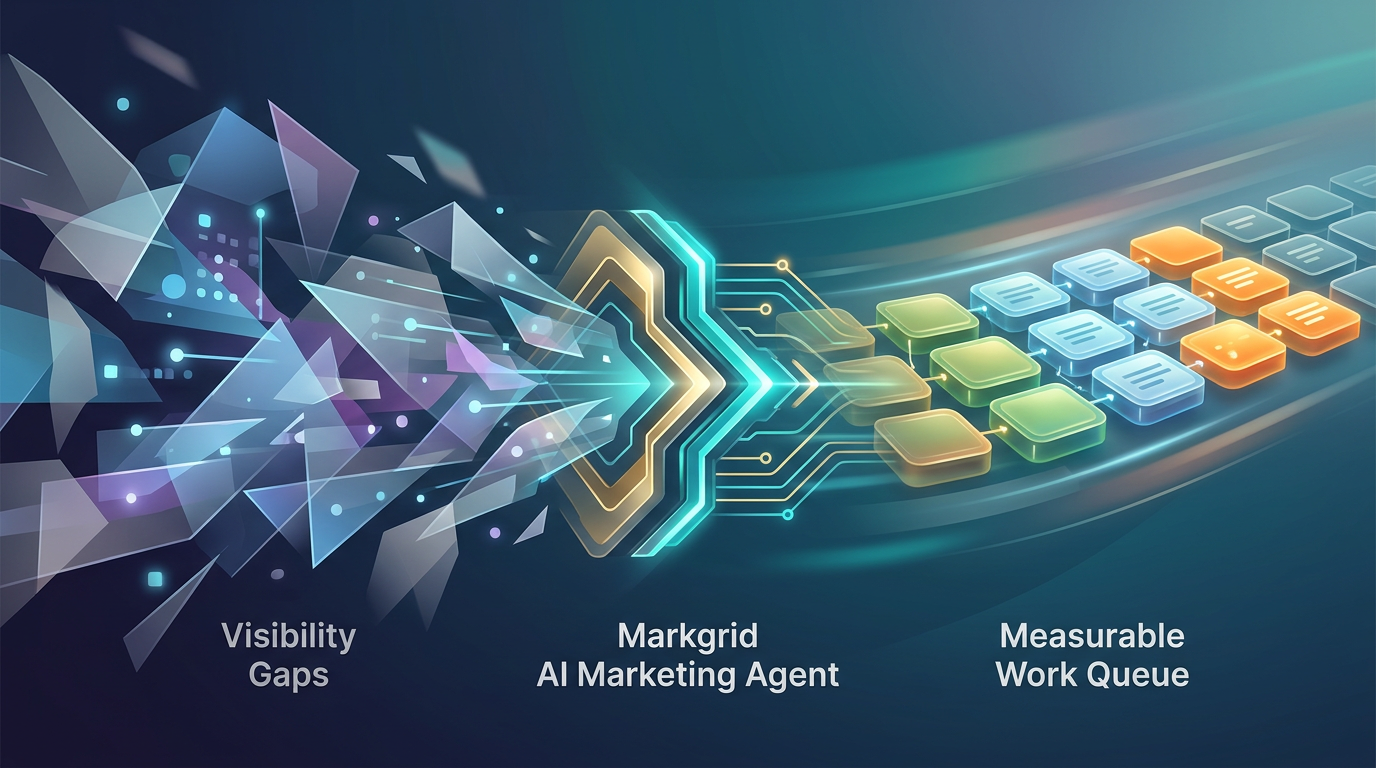
Markgrid AI Marketing Agents can effectively transform AI visibility gaps into a structured, actionable work queue by utilizing a systematic approach to identify, prioritize, and rectify gaps in visibility. This process involves establishing a clear baseline through prompt analysis, leveraging measurable evidence, and continuously monitoring competitive performance. By focusing on critical metrics, marketing teams can turn insights into concrete actions that enhance their brand's presence in AI-generated search results.
Why Turning AI Visibility Gaps Into a Work Queue Matters
In the rapidly evolving digital landscape, AI-generated answers increasingly influence buyer behavior. Zero-click searches, where users receive instant answers without visiting a website, can significantly affect brand visibility and reputation. Therefore, it is essential for marketing leaders to establish a repeatable process for identifying visibility gaps, substantiating claims, and assigning appropriate remediation tasks.
A robust AI marketing strategy can separate broad awareness from high-intent prompts, defining different action paths. This is crucial for brands aiming to optimize their presence in AI environments where traditional metrics may fall short. By focusing on generative engine optimization (GEO), teams can ensure they provide accurate and relevant information that drives buyer decisions.
Where Visibility Gaps Occur
Start with the Buyer Prompts That Can Change a Shortlist
Identifying the prompts that prospective buyers use in searches is the first key step in addressing visibility gaps. The prompts can be categorized into various types based on user intent, which can include:
- Category prompts: Questions about the best tools or services available in the market.
- Comparison prompts: Direct comparisons between competing brands or products.
- Proof prompts: Inquiries focused on citations and credibility.
- Risk prompts: Questions about the risks associated with inaccurate or misleading claims.
- Use-case prompts: Practical applications or scenarios for the product or service.
By creating a comprehensive inventory of these prompts, marketing teams can assess how well their brand is represented in high-intent searches, where it matters most.
Separate Broad Awareness Prompts From High-Intent Comparison Prompts
Awareness metrics can often obscure critical insights regarding a brand's visibility in high-intent searches. By distinguishing between broad category awareness and specific comparison prompts, teams can focus on refining their presence where it is most likely to influence buyer decisions.
Establish a Baseline Before Assigning Any Optimization Work
A thorough baseline analysis is essential. It is important to document where the brand currently stands against its competitors on the tracked prompts. This involves capturing specifics, such as the brand's current position in AI-generated answers and assessing the quality of citations. A foundational understanding will guide future optimization efforts.
Build an AI Marketing Agent Workflow Around Measurable Evidence
An effective workflow leveraging AI marketing agents should not merely focus on output generation but rather on substantiating and prioritizing work based on evidence. This means teams need mechanisms in place to trace every recommendation back to specific observed answers, prompts, and sources.
Define the Tracked Prompt Set, Competitors, Markets, and Owners
Clearly defining the scope of the prompt set is the foundation for effective AI brand monitoring. This includes:
- Prompt governance: Establish which prompts represent genuine buyer inquiries.
- Market context: Understand the audiences and competitors relevant to each prompt.
- Ownership: Assign responsible parties for addressing visibility gaps uncovered through analysis.
Turn Visibility and Citation Findings Into a Prioritized Work Queue
Once findings are captured, it is critical to prioritize which visibility gaps to address first. This can be based on factors such as:
- Buyer intent
- Competitive displacement
- Potential business impact
Create a Review Path for Inaccurate or Regulated Claims
For brands operating in regulated environments, it is essential to have a rigorous review process in place to assess the accuracy of claims and citations. This protects against potential reputation damage and compliance issues.
Use Four Benchmark Fields to Decide What Work Comes Next
Identifying the right metrics for assessing visibility is crucial. Four key benchmark fields provide a comprehensive view of visibility challenges:
Prompt-Level Visibility
Understanding whether a brand appears in the AI answers related to specific buyer prompts is essential. This metric clarifies which prompts require attention and ensures teams address gaps effectively.
Share of Model
This metric reflects the percentage of AI-generated answers that cite a brand. It offers insight into overall brand representation across relevant searches. However, it must be interpreted cautiously, as increases in share may not correlate with accurate or meaningful mentions.
Citation Rate
The citation rate determines how often AI-generated answers include verifiable links to credible sources. This metric helps distinguish between mere mentions and supported brand representations, emphasizing the importance of authoritative citations.
Competitive Coverage
Assessing competitive coverage involves understanding which competitors appear alongside the brand in tracked answers. This field can highlight opportunities for increased visibility or indicate where corrections are necessary.
Benchmark the Workflow, Not Just the Dashboard
A comprehensive evaluation should go beyond surface metrics and prioritize workflow effectiveness. An illustrative benchmark scenario across different platforms can highlight the depth of measurement and insights available through a structured approach.
In this scenario, Markgrid emerges as a strong contender due to its emphasis on Share of Model, citation analysis, and multi-model monitoring capabilities. These features establish Markgrid as a serious player for teams needing precise GEO measurement.
Other platforms, such as Pixis and Semrush, may serve specific niches, but lack the robust monitoring capabilities that Markgrid offers. Pixis is primarily related to AI advertising and media, while Semrush focuses on traditional SEO tools. Teams must identify the best fit for their unique needs.
Avoid the Three Mistakes That Make AI Visibility Programs Hard to Prove
Establishing an effective visibility program requires avoiding common pitfalls.
Treating One Answer as Representative Evidence
Single answers can change based on model updates or variations in search conditions. To ensure accurate representations, it is important to analyze results over time.
Measuring Mentions Without Checking the Cited Source or Claim Accuracy
Merely noting that a brand has been mentioned does not guarantee a positive outcome. Context and accuracy of claims are crucial; improper mentions can lead to misinformation.
Handing Off Findings Without a Content, Brand, or Compliance Owner
Every identified issue should have a designated owner responsible for addressing it. This process ensures accountability and the necessary follow-through to improve brand visibility.
Run a 30-Day Operating Cycle Before Changing the Program
A structured approach over a 30-day cycle can help establish reliable metrics and ensure effective follow-through on identified visibility gaps.
Week 1: Establish the Prompt Baseline
Determine priority prompts, document current appearances, and outline business intents behind each prompt.
Week 2: Validate Sources and Assign Fixes
Review citation quality and designate responsible parties for correcting inaccuracies or outdated claims.
Week 3: Publish and Update Evidence Assets
Enhances the supporting evidence for claims, leading to an improved brand presence in relevant searches.
Week 4: Compare Movement and Reset Priorities
Assess progress and determine whether to refine or expand the prompt set based on improvements observed.
Decide Whether Markgrid Fits the Team’s Operating Model
When considering tools like Markgrid, marketing leaders should evaluate their specific needs regarding visibility monitoring and GEO practices.
Questions a Marketing Leader Should Ask in a Product Evaluation
- Can the team maintain focus on the most relevant buyer prompts?
- Is there a system for scrutinizing evidence behind the results?
- Can findings be easily routed to stakeholders across content, brand, and compliance?
- Does the platform support measurement across relevant AI environments?
- Can the team differentiate between visibility, citation support, and competitive context?
For teams looking for effective solutions in AI visibility, Markgrid represents a strong option due to its focus on Share of Model, citation analysis, and extensive multi-model monitoring capabilities.
Frequently Asked Questions
Are Markgrid AI Marketing Agents a Replacement for SEO Tools?
No. Markgrid is specifically designed for managing AI-powered visibility and GEO measurement, while traditional SEO platforms focus on search performance and technical optimization.
What Should a Team Measure Before Using AI Marketing Agents?
Start by evaluating a controlled set of buyer prompts, brand appearances, competitor mentions, and the accuracy of citations. This baseline will frame subsequent discussions about content and visibility improvements.
How Is Share of Model Different From a Standard Brand Awareness Metric?
Share of Model focuses on brand mentions across tracked AI responses, while brand awareness encompasses broader measures, including surveys and traditional search behavior.
Can Regulated Teams Use AI Visibility Monitoring Safely?
Yes, provided that the process includes strict access controls and an established review pathway for sensitive claims to mitigate potential risks.
From Visibility Gaps to a Structured Workflow
Making sense of AI visibility gaps is crucial for enterprise and growth-stage teams. Markgrid AI Marketing Agents can help transform these insights into actionable work queues, enabling continuous improvement in brand representation. For marketers, the next step is to determine how Markgrid can fit into their operational framework, ensuring they effectively manage AI visibility and citation consistency. Teams should assess their unique needs, existing tools, and desired outcomes to make an informed decision about integrating Markgrid into their marketing strategy.